Is it just Zenglish?

Over the past decade or two, there has emerged into the popular parlance a slough of word variations which are cute, unnecessary, obscure and often simply wrong. Some of these are amusing; some quite inane. Most appear to arise from a cute twist, escaping a jumbled grasp of the English lexicon, to a fatuous flirtation with the sound of a word, unrelated to its actual meaning.

A word most notable in this regard is probably iconic, the adjective form of the noun icon. The word descends from classical Greek through Latin basically unchanged into English. An icon is an image, either visual or imagined, that represent a person, spirit, or even just an actionable abstraction which when appealed to is inhabited by that person, spirit or concept. The icon itself becomes a proxy of that which it represents and allows the viewer to commune with that which is being viewed. Think of it as something like the image of a face on a video link, not the actual person, but an in-person proxy image. Apple got it right when it introduced icons to their Macintosh computer screen. Touch it with your proxy-finger – clicking the mouse cursor – and it connects you to an interactive program. The word is ‘classy’ as it comes from ancient languages and sounds erudite, and it’s trendy as it emerges from Apple’s magical appeal. So, how can one “experience an iconic river journey”? American news has certainly taken the bait.

The Lakers great Jerry West is dead at 86. He was a literal icon of pro basketball: His silhouette is on the N.B.A. logo.

New York Times, Wednesday, June 12, 2024

The poor man has been reduced to a wooden triptych or perhaps a moss-covered statue? Well, he did play for the Lakers, a team name recognizing Los Angeles, the city of Lakes. Wait – what lakes? Words can deceive.

Language is a living thing. It has grown, merged, shed its tired and ignored parts altogether, and it has added words from without and within. Such contortions of the language, such as the one above, typically arise from generational slang, the secret, rebellious language of youth. In the forties and fifties, we played adolescent games with spelling. Quick became kwik, in a time of expansion and relative wealth when time was precious, speed was valued, and shorthand was the common. Also, this must have seemed cute and clever. In the sixties and seventies, we capture phrases from film, television, and cultural vernaculars, often echoed in the film and television. The culture sets, civil rights, racial poverty, drug use and the Viet Nam War, emerged into public attention, and youth reacted to these social issues, as youth typically do, in their opinions and in their language. The eighties and nineties were the decades of rising consumerism and for youth with expectations for college or facing sidelining to grunt-work. Americans became more deeply class determined based on levels of education and income goals. We began to speak two languages and used them to solidify our identities.

Non-Standard English was left to vibrant “under classes,” and the privileged “educated” rallied around the Standard. Crossing over, the “standards” toyed with the patois of the “non-standards,” somewhat daringly playing with fire. Conversely, the “non-standards” saw the use of Standard English as uncool, even disloyal, as attempts at “passing.” This muddying of social dialects and 19th century standards, as is apparent in this paragraph, is certainly characteristic of the vitality and growing pains of the language, and as English has evolved over the last millennium, our predecessors must have experienced this vitality and these growing pains as well. Words and phrases have been shifted or integrated into our usage well enough, but not always. Some have, thankfully, been expelled. Far out, man!

Here is an example of a slightly famous shift:

         Normality => Normalcy

Normality has, for several centuries, meant a state of normal or typical conditions. President Harding campaigned on the phrase “Return to normalcy.” Normalcy is a term from 19th century mathematics, as in right angles being “right.” Harding intended the word to refer to returning the country to its “normal” situation. A norm being a mathematical average, “normalcy” was perhaps intentional, in a governmental and social if not mathematical sense.

Well, Harding was a teacher briefly. Perhaps he chose the mathematical “normalcy” to seem more academic, or maybe his rather average educational experience left him unclear about the alternatives, and he went for the one that made him sound more electable. This writer has observed that the PBS New Hour has used “normalcy,” while DW News (Deutsche Welle news in English) routinely uses “normality.” Harding’s contribution then has been to American English, among his other contributions. Indeed, dictionaries in the U.K. and U.S.A. attribute normality to the Standard with normalcy to the American alternative. It’s all part of the story of our language.

Here is a challenge for readers: guess for yourselves which of the candidates below will survive the whimsy of the English language speaker. You may need to do a bit of research, but learning from research is many times more lasting than a read over.

  1. How is a scion a reasonable name for an automobile?
  2. What’s the meaningful difference between like and such as?
  3. Where does plus come from, and why should it not be substituted for and or also? (Est-ce plus clair?)
  4. Why would we say, “She was gifted a ring,” and not say, “She was given a ring?” (As a former teacher of nominally “gifted” students, it’s hard not to see this as one of their jokes on the world.)
  5. Why would we say, “The representatives expensed large sums to statute restoration,” and not say, “The representatives allocated large sums to statute restoration?” Or, why would be say, “The businessman expensed grant funds on workers’ safety,” and not say, “The businessman spent grant funds on workers’ safety?” (This is Latinization for the sake of obfuscation, i.e., big words for bullshit.)

One thing can be said for all this: English can be no end of fun
 

Everything Means Nothing: A Ponder

Everything means nothing.
Reality is meaningless.
Everything is everything;
But just one thing.
Consciousness,
Which consists of nothing itself,
Gives meaning to all things.

When we are aware of a thing,
That thing exists.
It is not a separate part
Of Reality, however.
Things only exist because
We have brought them into
Our reality.
All things then are constructs
Created by consciousness.
We create all things
And endow them with purpose,
Or no purpose.
Purposeless things, however,
Tend to sink back into
The homogeny of the whole.
Purpose then
Or lack thereof
Serves the intent of the consciousness;
We think we can
Or actually can
Benefit from it.
Purpose implies that all the things
We have or could have brought into existence
Have intent,
And therefore
By extension,
Everything is intentional.

Do we have the snake or maybe reason
Devouring itself by the tail?

Unless one is truly a solipsist,
He or she, or she or he, or they runs into trouble
When one assumes
We have perceived Reality,
When we have actually created
Or perhaps only defined
Our own unique reality,
As has every other consciousness in the universe.

Being one god
Among six and a half billion gods
Is complicated.
Can everyone actually be wrong
About the real reality?

“Everyone!”

Now there’s something to ponder.


Reading Guido Morselli, Dissipatio H. G., and starting to sound a lot like him, but without the references to obscure philosophers. I must read more escapist literature, or Jane Austin to forestall this sort of mind wandering, lest I meet the Minotaur one day.

29 June 2022

Okay. It’s about me.

I don’t typically write about myself. Actually I don’t even think of myself that much, except perhaps to coach myself about what I eat, how much exercise I am or should be getting, or when I have to start moving in order to be on time. Yes, self-discipline is a conscious effort. That sort of thinking however is attuned to the idea that this life is what we have. I believe there is more to be gotten from good quality life even if it means there is less of it. Anyway, living longer won’t get me into any post-mortal resident’s housing any more easily.

The payoff for quality of life is like an annual salary. Let’s say I’m earning at a rate of 50,000 smiley faces a year, and I live my last twenty years at this rate, right up to the end. I die a smiley millionaire, and while the faces surrounding my last hours may not be smiley faces, they are at least there. Now let’s say I’m living out my last years in a life conserving way, not exerting myself, not remaining active, not engaging in new and interesting adventures – basically, not taking risks. Sensible, perhaps, but a sacrifice of quality for quantity of life, this plan only pays about 40,000 smiley faces for the first year. Because the return to the world from such a life is weak, that rate decreases by about 5% in smiley faces each subsequent year. When I do the math, I see I’ll be able to live ten years longer enjoying what I can of an ever decreasing rate of smiley faces. That decrease will allow only a poverty rate for the last ten years of so, leaving me with under 700,000 smiley faces for enduring my extra, impoverished years. I will have out worn or out lived some of the faces that would have been with me at the end.

So when I think about myself, I think about things like this. I spend little time in such contemplation. I just get on with trying to live my life out at the highest quality I can achieve, and set about working to do that. But once in a while, my attempts to impose the sort of order that is the goal of self-discipline is knocked out by the relentless, entropic forces of the cosmic chaos. I contracted a case of what was probably gastroenteritis, something I had not suffered for about fifteen years. The rug came well and truly out from under my quality of life, two days before Christmas while out of state visiting my angelic wife’s family. I’ll spare you the details which did nothing to ameliorate my quality of life level – au contraire. By the end of the week, I was pretty much well again. I had only to endure a very busy day of air travel, which I consider a violation of human rights under almost any circumstances. (I would as soon prepare for and accept a colonoscopy as fly within a week of Christmas or Thanksgiving.) I could then however look forward to the New Year’s week with my wife working from home and part time. This would certainly be an increase in life quality.

Then, on an achingly cold New Year’s Day, as we were assembling a fairly easy jig-saw puzzle, I found my nose running, my eyes straining and my energy flagging. I was ushering in an upper respiratory infection as severe as any I can recall. I work in close contact with elementary students, and sometimes bring home their little colds, but this one should have been stricken the rolls of viral variants. So much for divine oversight. Now, seven days in, I am waiting for at least a decent night’s sleep, if not a surcease of post ocular pain, congestion, sneezing and coughing.

In the last two weeks that include two holidays and air travel, I had what amounts to four good quality days. I don’t count the air travel day. So, yes, I am writing about myself today, because I’m hurting and miserable and am indulging in a very low life-quality inactivity, feeling sorry for myself. And I am steeped in indignation that all life on the planet, which I regard as sacred, has ascended from organisms much like the miserable viruses that have had their way with me these last two week, and which are dancing around my head even now in sarcastic glee.

And don’t pity me. It won’t help.

Corrupting the English language for fun and profit

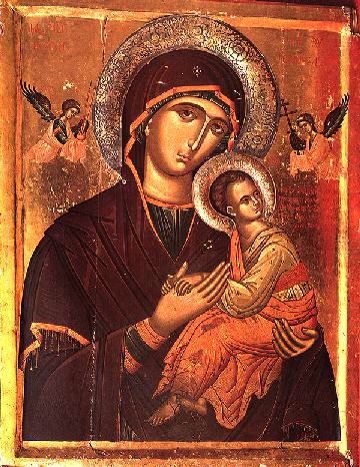
an icon


Here’s an icon representing Mary and Jesus. Speaking to it is speaking directly to Mary and Jesus.


an app

Here’s an icon representing text on a page inside a folder. Clicking on it, on your desktop, opens an app that you can type text on and read from.


a trainHere’s a picture representing the Orient Express. Speaking to it or clicking on it does not open any doors, allow one any access or (sigh) take one on an iconic journey. Yet the journey is “iconic” because it represents another opportunity for marketeers to misuse the ‘new word’ in Madison Avenue’s vocabulary. How very per-adolescent.

And awesome! Or wait…it doesn’t really inspire awe.
What is awe anyway. Awesome? Awful? Ah shucks? Ah well. Ah! Inspiring AH! Ahsome!

It’s not the Queen’s English anymore!

The Iconation of Everything

The abuse of the word "iconic" has become absurd. Its overuse indicates either a depth of ignorance on the parts of speakers and writers or a callous corruption of language inflicted on the ignorance of listeners and readers.

An icon is a thing inhabited or imbued with the spirit or meaning of something it represents. As a religious object, it might be inhabited with the saint or god of which it is an image. Thus, to speak to it is to speak to that saint or god directly. In a more mundane life, it may be an image that not only represents an action, but is actually a connection to it. Thus to click on a computer icon actually initiates a process in the computer system, such as starting a program. So an icon is a sort of vehicle or portal showing its purpose in its appearance.

In more recent usage, an icon has come to be a representative of a broader set or greater domain of sense or meaning. Thus Mt. Everest, whether it is the tallest mountain in the world or not, is an icon representing all that is majestic about the Himalayas or about great mountains around the world. Leonardo de Vinci is an icon of the Renaissance man as the ultimate of that ideal. However, all the mountains of the Himalayas or all Renaissance men cannot be icons of what they are. They do not represent anything other than just what they are.

If a thing or person is renowned, it does not make it iconic. If the person or thing does not particularly represent some greater idea, whether a characteristic of a greater set, a spirit of some power, an action of some result, a tradition of some group, or some other greater meaning than the thing itself, it cannot be thought of as iconic.

It is enough that we use Latinate suffixing rules to create trendy lexical redundancies at the expense of enriching our discourse with a powerful vocabulary. It eviscerates a rich language to serve up ground scraps as Salisbury steak. We are turning our prime lexicon into the haute cuisine of a fast food drive thru.

Iconate that Madison Avenue!

The Ape Ariseth

We have become the most advanced apes, and we wallow grandly in our apishness. Tool use, once thought to be the haute domain of humans has been grudgingly relinquished to the ape world. We hardly even talk about other tool users, dolphins, elephants, crows, octopuses (octopi?)…

We have far outrun the pack in tool use though. With the entrance of the computer and the dawning of the Information Age, we took tool use to its farther extreme—emulating the gods with our use of tools. Elevating science, technology, engineering and math to the supreme arts, we have banked our education, business, wealth and future on our use of tools. Planted before the stony backdrop of an obdurate universe, the ape has risen to swing his awful club in the face of God. En garde Ahuramazda!

Now we have 3-D printers. We can recreate our world in bits and pieces. One day, it is predicted, we may be able to use such tools to recreate food. If food, why not sexual partners? STEM is pretty sexy—the reddest apple, dangling just within the touch of our finger tips, soon to be fully in our grasp. Imagine life on the holo-deck, lounging on the holo-beach, munching holo-lotus seeds.

The earliest Star Treks were, for the adolescent minded, fascinating in their gimmickry, scope and power. Yet Rodenberry used these to deliberate upon matters of sociology and philosophy, for those of us who troubled our minds grappling with such things. These vagaries were the places no one dared to go. How will we use our godlike power tools then? And for whose benefit? To whose detriment?

But it is much more fascinating monkeying around with our newest tool—a word not far removed from “toy”—than it is to grapple with abstractions. Ah! Making sense of abstractions, bringing order to the chaos of what is only imaginable. Attempting to understand our place in the incredible fabric of the universe. Now that sounds like something even an octopus might struggle in coming to grips with.

Putting Aside Woolf: Libertarian Suffering

In talking with my brother yesterday, I was trying to explain to him, a translator of German literature—some obscure 19th century romantic, in particular—why it is that I feel I can put a book aside without finishing it. I was perhaps preparing him for the possibility of not finishing his recent translation of Wilhem Rabbe’s “At the Sign of the Wild Man,” just in case. Putting aside a book seems one of those things that people either do, more or less frequently, or don’t do, shuddering with irreligiosity at the thought. And it is with some irony that I feel I may put a book aside or a short story or any other piece of writing, as I have put aside the very writer who gave me this permission on two occasions.

I put aside Mrs. Dalloway and To the Lighthouse, both by V. Woolf. I’m not saying I would never try Woolf again, but there are so many other things I would read in the stream of consciousness school of about the period. I have of enjoyed rather very more such alternatives—J. Joyce in fact. I have enjoyed The Dubliners, piecemeal and as a collection, and I am enjoying again Portrait of an Artist as a Young Man—my first reading 33 years ago I recall as enjoyable but I couldn’t say why or have recalled much about the book except that it took that very strong personal voice of narration. I bought my first copy of The Dubliners in Dublin in 1990, though I had read a couple of the stories long before, as have most English majors. And I enjoyed the study of the stories of the collection as a set in the lectures of Mark Sutton at Cambridge in 2011. Oddly and also perhaps ironically, while attending downstream at the colleges, I have twice had tea at the Orchard, the tea shop with tables, chairs and even stinging insects among the trees of an old apple orchard near Grantchester, Cambridgeshire, once a haunt of Rupert Brooke, Virginia Woolf, and others—and have come away from there enjoying much of Brooke’s works, though that liking became muted by a certain redundancy, but I have not felt the least inclined pick up Woolf again.

So why is it that I can so much enjoy one and dislike to the point of turning away the other of two of the greatest stream of consciousness writers of the English language? I wonder if it is the gender of the narrator. Yet if it were only the narrator’s gender and presumable my ability or inability to identify with it, then why would it be that I loathe, and do not finish, reading Henry James—I nearly gagged on the first half of The Portrait of a Lady before quitting it—and quite enjoy Edith Wharton? No, it is more than just gender. I wondered if it has to do with class. Yet my two all-time favorite writers are Thomas Hardy—well the classes are certainly in his novels, but in all their colors—and Jane Austin for whom class is not a factor, as anything in a lower class would, like a toilet, be well used but never mentioned, and anything in a higher class would have been—well—quite Olympian. No, the issue for my choosing not to finish a Woolf book is not one of social justice of gender or class.

I would, I believe, have to read a great deal of something that I don’t like to determine why I don’t like it. I might also have to read other writers I consistently disliked to see a common thorn. Suffering for the sake of analyzing that which makes me suffer? I think not. So I have taken Woolf’s advice, gotten I know not where, of putting aside a book I am truly not liking and moving on to something else. Yet here I am writing about this choice as if to justify it. Yes, there is a monitor in my reader’s heart that tells me to read on, finish what I’ve started. And I have. Reading The Last Temptation of Christ, for a class I imagine, was a nightmare. It was, all the same, the first book about which I could say, “I hated reading it, but I love having read it.” So, I will read on. Who knows but that I may discover a greatness in the last page, the last word. The very best things in life are those unlooked for, but not overlooked, after all. I’m just not looking for them in Woolf.

The Wise Fools of the Mediterranean

Asked Julian of Maddalo[1]:

“How come the mad to be wise,

Or the wise to go mad?

Which was Tiresias[2]?

Is what they say madness,
All the dark backside of understanding?

Is what they say wisdom,
all illuminated by such understanding?

Does madness make what’s imagined seem brilliantly illuminated?

Does wisdom make what’s sensible seem darkly obscure?

When we peer into San Servolo[3],
Do we see the sun set over Venice?”


“Such debate is vanity,”
Answered Maddalo to Julian.

July 2011


Note: While attending a lecture on “Julian and Maddalo” given by John Gilroy at Cambridge University, I was struck by the number of times, in film and fiction, I had observed characters, frequently, descending into an asylum to consult, or at least visit and inmate, often having been hidden away there, and always suffering some form of madness. Yet what these mad men and women contribute to their narrative home is often crucial to the understanding of in important character, and sometimes to life itself. Furthermore, the asylum, and indeed the whole narrative, seems always to be set in Greece or Italy or Spain or some other Mediterranean land. Now why is that?

Just a jolly folly poem.


[1] “Julian and Maddalo” is a poem by Percy Bysshe Shelley, sub-titled a conversation," it reflects discussions between Shelley (Julian) and Byron (Maddalo) at Venice in August and September 1818.

[2] In Greek mythology, Tiresias was a blind prophet of Thebes, famous for clairvoyance and for being transformed into a woman for seven years.

[3] By the beginning of the eighteenth century, or soon thereafter the Senate of the Republic of Venice designated San Servolo as the site of a new military hospital, needed due to the continuing war against the Turks. Later the hospital was used to care for the mentally ill.

Lullaby

Don’t be afraid, for it’s only the night,
Stealing around us, holding us tight,
Like water surrounds us, this warm moist night,
Soothing our bodies, but bringing on fright.

Don’t be afraid, for it’s only the night,
Brought with the kindness of those who adore,
Powerful masters who dreamt up the night,
Whose wealth of mild dreams gives us soothing delight,
Whose soft, patient hands hold back the cruel light.

Don’t be afraid, for it’s only the night.
The dreams that it brings are beautifully pure.
You dream the strangeness. You make the fright.
Yours are the monsters that prowl through the night,
Stealing your pleasures, stealing delight,
Stealing and stealing as always tonight.

But don’t be afraid, for it’s only the night,
Brought by the wise ones who mean you no harm,
Who know you would perish without any light,
(Who know you would perish, a warming delight,)
If they don’t protect you in the dark of the night.

No, don’t be afraid, for it’s only the night.
It isn’t they who give you this fright.
You dream the terrors that prowl through the night,
Turn masters to monsters, where there’s no light.
You dream the evil they do to your soul,
Imagine the menace that lurks down the hole,
Make up the terror that seethes from the gloom.
You are the one who’s alone in the room.
You dream the peril that skulks ‘neath the bed,
Phantasms of your mind make up your dread.
Yes,
You dream the terrors that prowl through the night.

These are not dangers.
There’s nothing to fear.
Those are not strangers,
Those voices you hear.

Don’t be afraid, for it’s only the night,
The masters of darkness will make it all right,
Quelling your fears, and calming your fright,
Controlling what’s there in the absence of light.

Don’t be afraid, for it’s only the night,
Stealing around us, holding us tight,
Like water surrounds us, this warm moist night,
Soothing our bodies, but bringing on fright.

October 2009


Prepare for the end of the world. More on the ten o’clock news.

I was just having some thoughts while driving home this afternoon. I had stayed a little later than I had intended, it was snowing and still a little icy, and it was Friday, so I could have and did anticipate a slow, trafficky commute. I had the pleasure of a fine young man, whom I knew lived on my way home and who would have had to take two city busses in a lengthy trip home. He offered the opportunity for some good talk about school and books we had read and liked and didn’t like. Having his company, made the trip tolerable in the face of some pretty irritating demonstrations of driving that would have lit all my fires on a lonely trip.

This is Minnesota, and now is climate change. Global warming doesn’t mean everywhere keeps on being as it has always been, but one or two degrees centigrade warmer. No. no. Here in the provinces, it means hurricane levels of low pressure rolling through setting new records, spring and summer arriving a few weeks ahead of schedule, and temperatures in the seventies one week and the teens two weeks later. In other words, it means wacky adjustments to the new normal, One thing has not change here in Minnesota though; it snows and we have to drive in it.

Another change that comes with climate change, though I don’t think there is any causal link, is a progressive increase in the tone of weather prediction and reporting. Weather is drama.  Katrina set the mark for a new high in politicized media hype around weather. Not that Katrina didn’t deserve the coverage, but such a media blitz doesn’t come often, thank goodness, or easily. I does change the game though. Now, the weather people assure us that weather is a sign of Armageddon. Demonic catastrophe falls from the clouds in paralyzing sheets. It swells from the seas in all consuming waves. It screams out of the very air around us in shrieking blasts. I mean, this really sells more soap than they do on WDUM. With this in our minds, mine and the driver of the car ahead of me, I could understand why that car was travelling 15 miles per hour while everyone was trying to maneuver around it on somewhat slippery roads in the Friday afternoon rush. That driver had heard the weather report warning of the almost certain difficulty on the drive home once the snow began to fall. That driver, like me, had heard this warning  Wednesday and yesterday and this morning, three? Six? A dozen times? "It must be bad out here. These other drivers have no idea how bad these conditions are!"

We did indeed know how bad conditions were. The streets were riddled with cars driven by hundreds, perhaps thousands of people who believed death was stalking them in an ice encrusted Kenworth truck, or maybe a beslushed Prius. They slowed for intersections, although they were already going slowly. They straddled lanes to avoid a sudden, perilous sideways slide into a city bus. Tentative. Cautious. And making driving conditions damnedably difficult, just as the weather person had warned me.

I realized, though I did not share my realization with my young passenger, that the media were competing in this dramatizing of rather typical predictions and events because they need to get and keep our attention as part of the free market environment in which we are currently wallowing. We live in market driven times. The old fifties assessment that the advertisers created the need they were then ready to fill has become more systemic, more internalized in our twenty-first century psyche. In almost Pavlovian obedience, we are always searching around for things we need, and we will know we need them when we find them. Since we are always searching, the world must be ever ready to produce needs. Today’s drivers needed to know that the drive home tonight would be difficult. I would not have been able to assess the surface conditions walking across the street and parking lot from school, brushing the snow off my cold car, driving out of the parking lot and down the block to the stop sign, and there turning left. I had however already learned from six or seven animated, terror fueled  media warnings what I needed to know; the driving conditions were going to be difficult.

Enjoying my oppositional disorder to the max, I drove as I normally would on slightly slippery streets, made slippery by the way by the ice  remained from two days before. We had not needed to be warned about that storm so much. A lost marketing opportunity.

Well, if the media are not trying to cause traffic jams with their weather forecasting, why does it happen? And it does happen. It feels hotter when we are told repeatedly how hot it will be, colder when we’re told how cold, and snowier when we’re told how snowy it will be.  When Democrats were told by almost every media outlet for weeks that they would not be going to the polls during a midterm election in a great recession because they were seriously unexcited about the election, they dutifully did not vote. Why do we comply in these self-fulfilling prophesies promulgated by the media markets in the guise of news and weather? Because they tell us what we need to know, and therefore, we know that if they hadn’t told us, it was because we didn’t need to know. We are after all helpless, and the media simply plays to our sense of helplessness. It assumes, perhaps correctly, that we cannot do anything to improve our lives, and we certainly can do nothing to make this a better world. That’s out of our hands, and luckily someone else’s fault. We will be told what we need to know.

I got my young man home in plenty of time. The snow wasn’t so bad. I guess I didn’t need to know.

Now, I must admit, it is some days later, and we are in the middle of the worst snow storm in almost 20 years, which the media has been hyping for two days as the worst blizzard in nearly 20 years. I hate when they’re right on top of 60 hours of alarmist, apocalyptic doom weather news!